

Selecting a ServiceNow partner is one of the most critical decisions an IT leader will make. ServiceNow is a strategic platform, not a plug-and-play tool, and the difference between a generic implementation and a high-performing, scalable ecosystem lies almost entirely in the expertise of the partner behind it.
This guide is designed for CIOs, IT Directors, and Service Management leaders who are in the vendor evaluation or final decision phase and need a clear, experience-based framework to choose the right ServiceNow partner—beyond brand size or marketing claims.
At Aloha Clouds, we work exclusively with ServiceNow and believe in what we call the Boutique Advantage: senior-led teams, deep platform craftsmanship, and long-term architectural accountability. This guide reflects not only industry best practices, but also what we have learned delivering ServiceNow programs across Europe and the United States.
The ServiceNow Partner Selection Checklist
Stop buying generic pitches. Start evaluating architectural excellence. Download our 10-point checklist to separate order-takers from true ServiceNow architects.

This essential 10-Point ServiceNow Partner Checklist was meticulously curated by Aloha Clouds’ Senior Architects (including 4x Certified Technical Architects) based on their track record of successful implementations.
1 Partner Tier & Model of Engagement (GSI vs Boutique)
What it means
The ServiceNow ecosystem includes Global Systems Integrators (GSIs) and Boutique Specialists. Each model serves a different purpose, and choosing the wrong one often leads to misaligned expectations.
Question to ask your ServiceNow partner
“How does your delivery model ensure we receive specialized attention rather than a one-size-fits-all implementation?”
What good looks like
GSIs excel at massive, multi-platform logistics. Boutique specialists are built for agility, seniority, and craftsmanship, especially when ServiceNow is a strategic core platform.
How Aloha applies this
Aloha Clouds operates exclusively as a ServiceNow boutique consultancy, giving clients direct access to senior architects and decision-makers throughout the project lifecycle.
Want to know more about our signature approach?
2. Module-Specific Experience
What it means
ServiceNow expertise is not generic. A partner strong in ITSM may lack depth in HRSD, CSDM, or CSM, leading to design shortcuts and rework.
Question to ask
“Can you explain how you’ve applied this module in organizations similar to ours?”
What good looks like
Partners who understand the business logic behind each module, not just configuration steps.
How Aloha applies this
Our teams specialize by module and industry, allowing us to adapt ServiceNow best practices to real operational constraints, not templates.

Dive into our senior-led insights
3. Senior Technical Leadership (CSA & CTA)
What it means
ServiceNow architecture decisions have long-term consequences. You need to know whether your platform is designed by junior admins or by Certified Technical Architects (CTA).
Question to ask
“Who will be our lead architect day-to-day, and what certifications do they hold?”
What good looks like
Direct involvement of senior architects throughout delivery—not just during pre-sales.
How Aloha applies this
At Aloha Clouds, the architects you meet during evaluation are the same ones designing and governing your platform. Our teams are CSA and CTA-led, ensuring architectural continuity and upgrade-safe decisions.

Expertise is earned, not just claimed.
4. Managed Services Capability (Beyond “Keeping the Lights On”)
What it means
Managed Services should not be reactive ticket handling. They should continuously improve the platform.
Question to ask
“How does your support model help us innovate after go-live?”
What good looks like
A multi-tier model that separates Run, Evolve, and Architectural Assurance.
How Aloha applies this: Aloha Care
Aloha Care is our signature managed services model:
- Run – stability, security, and daily operations
- Evolve – continuous implementation by subscription
- Assure – architectural governance and long-term confidence
One team. One rhythm. One contract.
5. Certifications, Partner Tier & Ecosystem Presence
What it means
Certifications validate current platform knowledge, but ecosystem presence proves real engagement.
Question to ask
“How do you stay current with ServiceNow evolution beyond certifications?”
What good looks like
Certified teams that actively participate in ServiceNow events, forums, and knowledge sharing.
👉 Official verification via ServiceNow Partner Finder (meter link)
How Aloha applies this
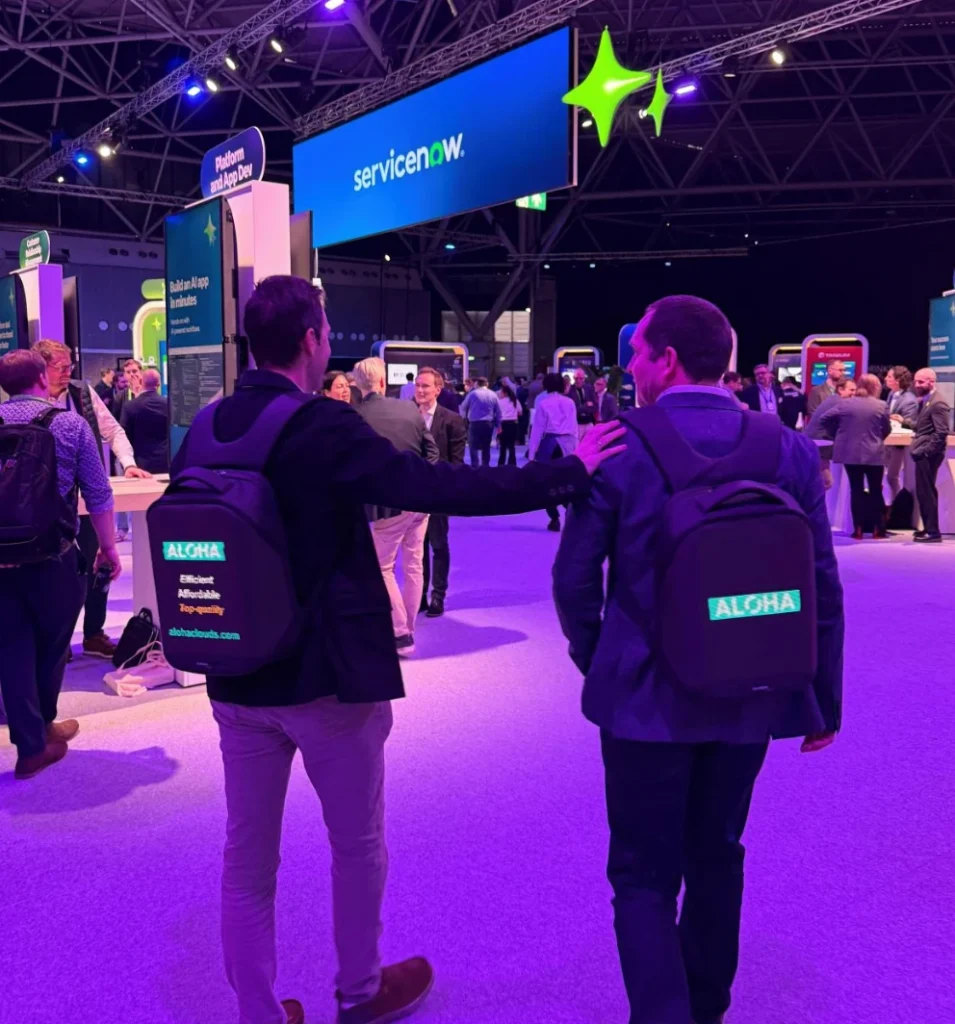
Aloha Clouds holds certifications across ITSM, HRSD, CSDM, and App Engine and actively participates in ServiceNow World Forums across Europe (Amsterdam, Paris).
Check our last experience:
ServiceNow Partner Comparison Table
How to use this table:
Use it to evaluate which engagement model best aligns with your business complexity, governance needs, and desired time-to-value.
| Feature | Global Systems Integrator (GSI) | Boutique Specialist (Aloha Clouds) |
| Primary Strength | Massive scale & global logistics | Agility, Seniority & Craftsmanship |
| Typical Team | Large, mixed seniority levels | Small, senior-led (CTA/CSA focus) |
| Best Fit For | Billion-dollar multi-platform contracts | Specialized ITSM & HRSD excellence |
| Engagement | Scaled and standardized | Personalized & “Concierge-grade” |
| Time-to-Value | Focused on massive rollouts | Focused on rapid, agile delivery |
| Decision Making | Can be hindered by bureaucracy | Fast, flexible, and direct |
6. Request for Case Studies and References
When evaluating a ServiceNow partner, it is essential to look beyond general platform experience. A strong partner should demonstrate proven success not only as a ServiceNow consultancy, but within your specific industry and operating context.
Requesting case studies and references allows you to validate:
- Experience solving challenges similar to yours
- Ability to adapt ServiceNow best practices to real-world constraints
- Consistency in delivery across regions, teams, and business units
Equally important is understanding how those results were achieved: the methodology, governance model, and level of senior involvement throughout the engagement.
Aloha Cases Studies: Boutique Results, Global Impact
At Aloha Clouds, every engagement follows a senior-led, architecture-first approach. We focus on long-term platform health, not just short-term delivery, ensuring that ServiceNow evolves alongside the business without accumulating technical debt.
Our work combines deep platform expertise, pragmatic process design, and close collaboration with client teams—what we call the Boutique Advantage in action.
Discover how this approach translates into real results:
Case Study 1: International HRSD Standardization
- Industry: Energy (Leading Spanish Multinational)
- Problem: Lack of standardized HR processes across different regions, leading to operational friction.
- Solution: Global ServiceNow HRSD implementation for Spain and the UK.
- Timeline: Phased international rollout.
- Results: Optimized HR service delivery across borders, achieving a consistent employee experience and significant improvements in operational efficiency.
Case Study 2: Platform Architecture & CSDM Excellence
- Industry: Consumer Goods (Renowned Swiss Chocolate Manufacturer)
- Problem: Need for a scalable roadmap to integrate multiple IT processes and system silos.
- Solution: Two-year partnership as Platform Architects using our “Aloha Maui” model. Implementation of ITSM best practices, CSDM, and Strategic Portfolio Management (SPM).
- Timeline: 24+ months of continuous evolution.
- Results: Streamlined global operations and seamless onboarding of new users across multiple countries through robust system integrations.
Case Study 3: Managed Services & UX Transformation
- Industry: Biopharmaceutical (Leading U.S. Biotech company)
- Problem: Low employee engagement with the legacy portal and high maintenance overhead.
- Solution: Long-term Managed Services and platform governance. Major upgrade to the Employee Service Center (ESC) and CMDB optimization.
- Timeline: 2 years of ongoing strategic initiatives.
- Results: Significant increase in portal usability and employee satisfaction (EX), ensuring a healthy, updated, and high-performing CMDB.
7. Pricing Transparency & Commercial Model
What it means
ServiceNow pricing should support long-term platform evolution, not just initial delivery.
A transparent commercial model allows IT leaders to plan roadmaps, prioritize initiatives, and measure ROI without being constrained by unpredictable costs, change orders, or fragmented contracts.
Question to ask
“How is your pricing structured once the initial implementation is live, and how do you handle roadmap evolution without renegotiating scope?”
What good looks like
A pricing model that is:
- Predictable and easy to forecast
- Aligned with outcomes, not just hours
- Flexible enough to support continuous improvement
- Free from hidden costs or recurring change orders
This typically means moving away from purely time-and-materials contracts toward models designed for platform lifecycle management.
How Aloha applies this
Aloha Clouds operates under a subscription-based model designed specifically for ServiceNow’s continuous evolution.
Our approach includes:
- One transparent subscription covering Run, Evolve, and Assure
- No change orders for roadmap adjustments
- Clear prioritization aligned with business value
- Commercial simplicity for IT, procurement, and finance teams
This model enables organizations to treat ServiceNow as a strategic platform, not a series of disconnected projects: delivering predictability, governance, and sustained ROI over time.
About the Author
Ready to design your ServiceNow future?
Experience the difference of a partner that treats your platform as their own.

FAQ for Decision Makers
A ServiceNow partner provides the technical expertise, strategic roadmap, and implementation services required to configure and optimize the ServiceNow platform for your business needs.
Costs vary based on scope and complexity. However, a boutique approach often reduces costs by 20–30% compared to GSIs by eliminating unnecessary overhead and focusing on OOTB features.
A standard ITSM or HRSD MVP (Minimum Viable Product) typically takes between 12 and 20 weeks, depending on data migration and integration requirements.
Compare them based on their architect-to-junior ratio, their specific module experience (check their CSAT scores for that module), and their willingness to provide a transparent, long-term governance model.